Google Snake
Google Snake
Google Snake
What is Google Snake?
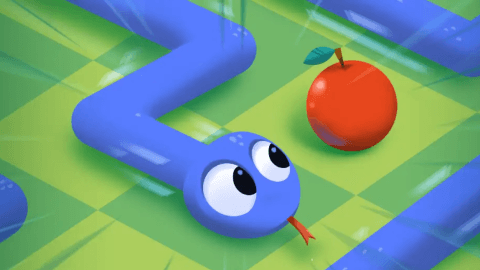
Google Snake recreates the timeless snake adventure made famous by early mobile phones, now polished with bright colors and charming animations.
The rules are simple: steer the snake across the grid, scoop up fruit, and grow longer while avoiding walls and your own tail.
This version adds gentle effects, forgiving difficulty ramps, and booster fruit so both newcomers and nostalgia hunters feel right at home.
Why Players Love Google Snake
- Responsive keyboard and touch controls for instant turns on desktop or mobile
- Special fruit that temporarily boosts speed for players chasing high combo scores
- Custom color palettes inspired by Google Doodle celebrations to keep runs feeling fresh
- Quick pause and resume flow so you can drop in for a one-minute break or marathon session
How to Play
- Press the play button, then use arrow keys (or swipe on mobile) to choose your first direction.
- Collect glowing fruit to grow longer and boost your score multiplier.
- Avoid hitting the stage boundary or your own tail - one collision ends the run.
- Grab rare booster fruit to speed up briefly, but plan your turns so the pace spike does not trap you.
Editorial Review: Why the Simple Rule Set Still Works
Google Snake is strongest when treated as a route-planning game rather than a test of frantic reflexes. Every fruit changes the board in two ways: it adds one point, but it also removes another safe square by lengthening the tail. Early turns feel generous because the snake occupies little space. The real puzzle begins later, when a direction chosen several seconds ago determines whether a corridor remains open. That delayed consequence gives a familiar game surprising tactical depth without adding complicated controls.
Our editorial verdict is that this is best suited to short, repeatable score attempts. A run starts quickly, failure is immediately understandable, and improvement is visible without a tutorial. The design is less forgiving for players who prefer relaxed exploration because one mistaken turn can erase a long run. For players who enjoy learning through repetition, however, the clean feedback loop is the main attraction: survive, identify the route that failed, and try a safer line next time.
- Best for quick score-chasing sessions and players who like readable rules.
- The meaningful difficulty comes from preserving future space, not from memorizing many controls.
- A keyboard gives the clearest directional input; touch play benefits from slower, deliberate swipes.
Advanced Strategy: Build a Route Before You Need It
A reliable long-run pattern is to travel in broad parallel lanes instead of making tight circles around each fruit. Sweep across one row, move down, then return across the next row while leaving a clear exit at the edge. This uses the whole board and keeps the head from meeting the tail unexpectedly. It may take longer to reach a nearby fruit, but the safer route is usually worth more than a fast pickup that creates a sealed pocket.
Before turning toward fruit, check three things: where the head will be after the turn, where the tail is moving, and whether at least two exits remain. Two exits matter because the fruit can appear in an inconvenient place on the following move. If only one escape line remains, continue the current sweep until the tail opens more room. Late in a run, think in shapes rather than individual squares. Wide rectangles are recoverable; small loops and narrow spirals are often traps.
Common Mistakes and How to Correct Them
The most common mistake is reversing direction mentally faster than the game accepts input. Snake cannot turn directly back into itself, so rapid opposite commands may produce a different move from the one a player imagined. Use quarter turns: if you are moving right and need to travel left, first move up or down, create a safe gap, and only then turn left. Tapping once per decision is more dependable than pressing several keys at once.
Another mistake is hugging the wall with no planned exit. The boundary can be useful because it limits the directions from which the tail can approach, but it becomes dangerous when the snake fills the same edge. Leave a one- or two-row channel that can be used on the return path. When a run feels crowded, stop chasing the shortest route to fruit. Spend a lap expanding the distance between head and tail; the score pauses for a moment, but the board becomes manageable again.
Controls, Accessibility, and Session Tips
On desktop, use the arrow keys and keep one hand in a neutral position so each direction receives a distinct input. On a phone or tablet, make short swipes from the center of the play area rather than near browser navigation edges. If touch inputs feel inconsistent, rotate the device only before starting a run; changing orientation mid-game can interrupt focus or resize the board. The embedded version presented here may differ from other Snake implementations, so use the visible in-game menu as the final reference for available modes and settings.
For practice, set a small objective that is independent of the final score. One session might focus on avoiding tight loops; another might aim to complete five full board sweeps without an emergency turn. These constraints reveal whether a technique is becoming automatic. Take a short break after several failed runs, especially if inputs become faster and less deliberate. Snake rewards calm planning, and a rested attempt often outperforms a long sequence of rushed restarts.